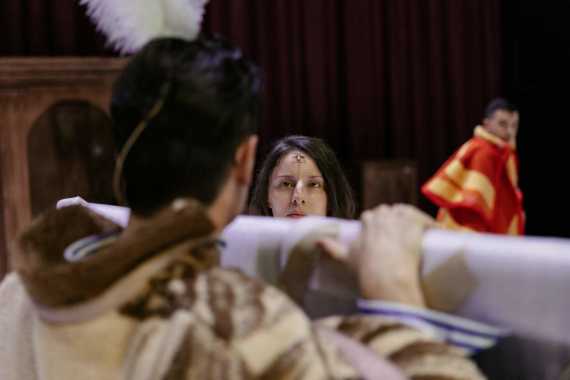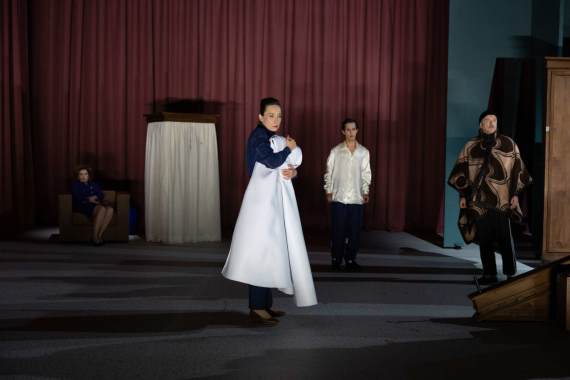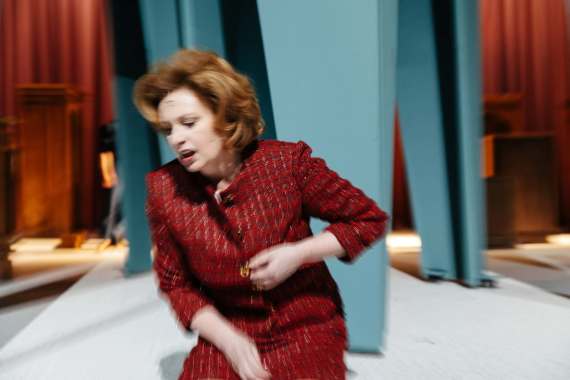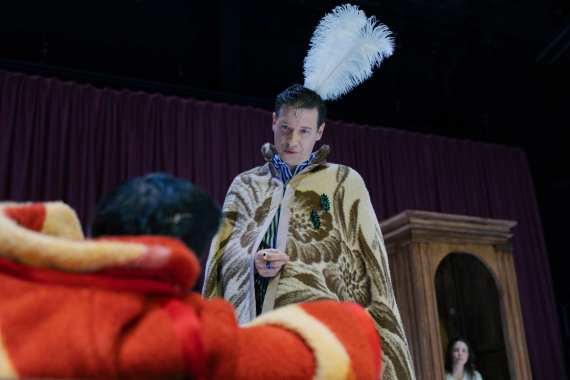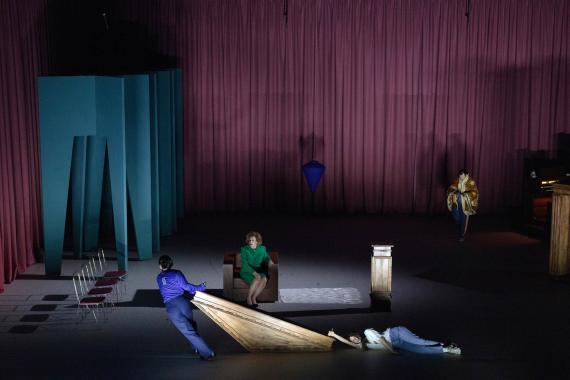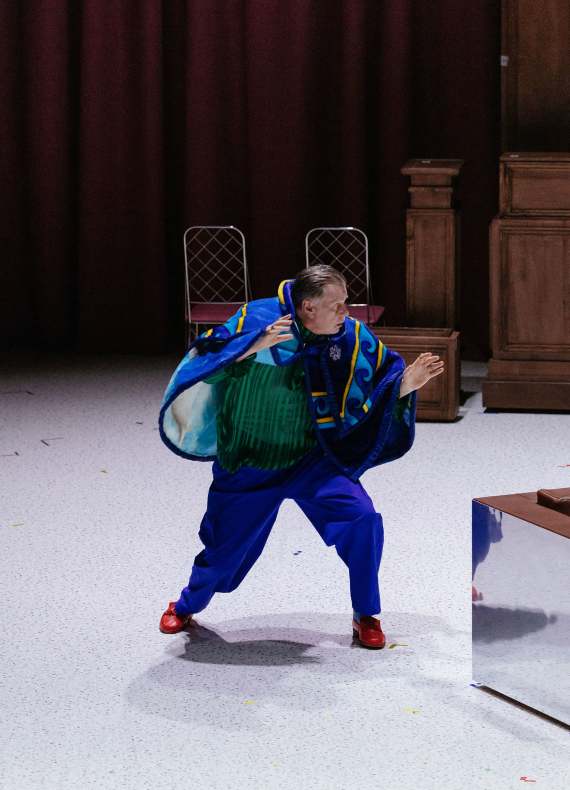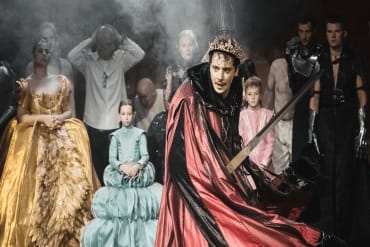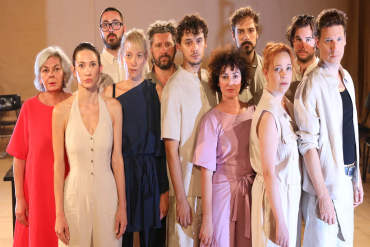
Mary Stuart by Friedrich Schiller (1759–1805), written five years before his death, is considered one of the cornerstones of German classical drama. It reflects the tenets of Schiller’s artistic and philosophical oeuvre, where theatre becomes an aesthetic state, a realm of beautiful illusion, aimed at elevating humanity towards its ideal.
Being a historian, Schiller often gravitated towards complex historical themes, a tendency particularly pronounced in his mature works. Mary Stuart captures the critical moments of Elizabethan England during the 1580s. Henry VIII, Elizabeth’s father, had already begun introducing Protestantism. Spain, France, and other Catholic nations sought to destroy the newly formed Church. Under Elizabeth—herself a victim of political violence and assassination attempts—the country reached the height of its internal religious and political turmoil. At this point, Mary Stuart, Queen of Scots and a devout Catholic, stepped onto the political stage, viewed by many devout Catholics as the rightful sovereign and heir. Strictly speaking, under canon law, Mary Stuart had a stronger claim to the throne than Elizabeth, the illegitimate daughter of Henry VIII.
The play unfolds over five acts, moving between London’s Westminster Palace and Fotheringay Castle, and depicts the final days of Mary Stuart, a political prisoner awaiting execution. History has already taken its course, and Schiller offers us a drama of consequence—analytical in nature—when hope for reprieve, however feeble, still flickers. On one side, we find Elizabeth, a Protestant raised within an ethic of restraint and renunciation, who has disavowed desire and withdrawn from her natural role, submitting to no authority but that of the Crown. She is, in that sense, more queen than woman. Opposite her, as if in an inverted mirror, stands Mary Stuart, a Catholic, embodying the archetype of the tragic mistress from bourgeois drama—depicted by Schiller as seductive, erotic, and impassioned, more woman than queen.
At the heart of the drama lies their encounter—a meeting that never took place. Outdoors, near the castle where Mary is held, the two fractured souls meet: two incomplete ideals and irreconcilable principles. In their clash, the queens fight unto death; two women, locked in an unrealised romantic triangle, are driven to utter destruction. Only one will emerge victorious; the other will remain the one true queen.
The play is directed and choreographed by Matija Ferlin, a theatre artist known for his distinctive poetics. His long-time collaborator, writer, and dramaturge Goran Ferčec, penned the adaptation.