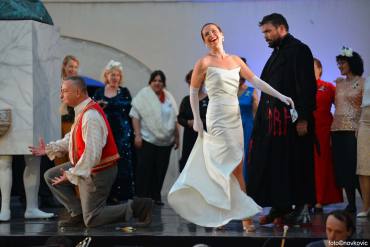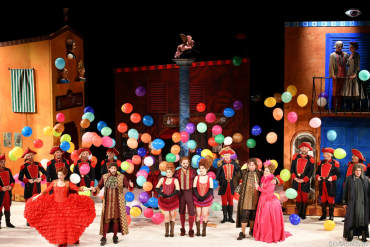
Oscar Wilde’s play Salomé long attracted Richard Strauss as a possible operatic subject. Wilde himself remarked that Salomé was written like a musical score, with recurring motifs around which the action is structured. Working from the German translation by Hedwig Lachmann and omitting certain refrains and motifs, Strauss retained Wilde’s dramatic core. The opera Salome premiered in Dresden in 1905. The soprano cast in the title role refused, on moral grounds, to perform the Dance of the Seven Veils and was replaced by a dancer. This exception would soon become common practice. Censorship proved relentless. London saw Salome only in 1910, and in an altered version. In Vienna, Gustav Mahler unsuccessfully attempted to secure permission for its staging, and the premiere there had to wait until 1918. New York’s Metropolitan Opera withdrew the work after a single performance and did not return to it until 1934. Zagreb, however, proved a more liberal environment, and Croatian audiences saw Salome as early as 1915.
This opera united a biblical subject with eroticism and violence and it demonstrated that scandal can be the best form of promotion: within two years of its premiere, it was performed in around fifty theatres across Europe. The libretto preserves Wilde’s symbolist atmosphere and its tightly compressed structure, which Strauss follows in a continuous musical flow without separate arias or ensembles, assigning the orchestra a central role in shaping the characters. The action of this one-act opera unfolds on the terrace of Herod’s palace. Salome, his stepdaughter, is obsessed with the imprisoned prophet Jochanaan (John the Baptist), while Herod’s desire for Salome and Jochanaan’s ascetic rejection of all earthly things form the central triangle of this decadent work, musically situated at the threshold between late Romanticism and emerging Expressionism.
Stage Director Marin Blažević and conductor Ville Matvejeff previously collaborated on Strauss’s Elektra at the Croatian National Theatre Ivan pl. Zajc in Rijeka. Salome now emerges as a natural continuation of that artistic dialogue.