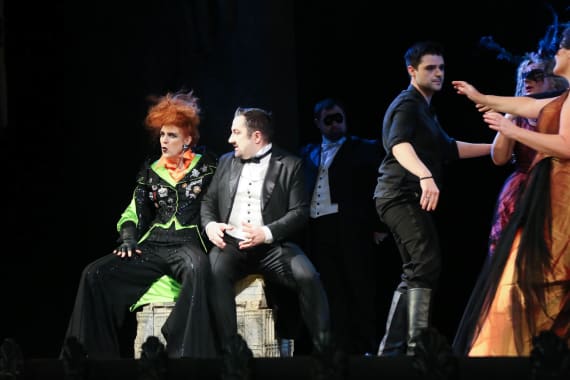
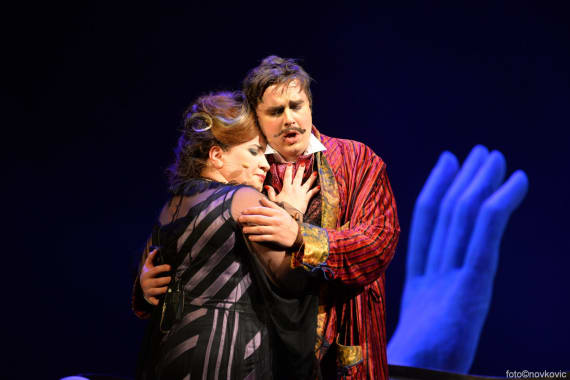
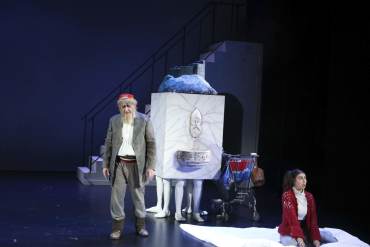
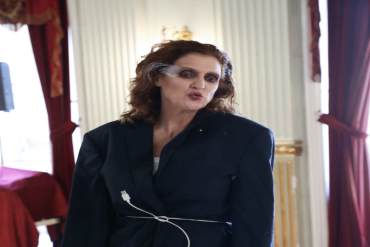
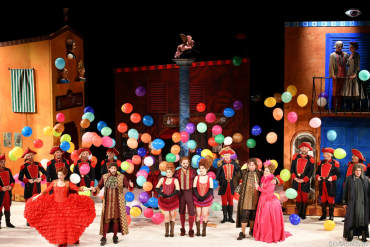
Die Fledermaus, a famous three-act comic operetta by Johann Strauss Jr., was first performed in Vienna in 1874, establishing itself as a hallmark of the operetta genre. Over six years, the operetta was staged in over 170 theatres in German-speaking territories, clearly illustrating its vast popularity. It is often hailed as the operetta of all operettas, with Gustav Mahler declaring it the finest comic opera. It was also lauded by Franz Liszt, Richard Wagner, Arturo Toscanini, Herbert von Karajan, Leonard Bernstein, and many other renowned musicians. The libretto was penned by Richard Genée and Karl Haffner, based on the farce Das Gefängnis (The Prison) by Jules Roderich Benedix and the vaudeville piece Le Réveillon by Henri Meilhac and Ludovic Halévy. Emerging from a theatrical farce of the vaudeville type, Die Fledermaus embodies all the characteristics of a comic opera. It is chiefly orchestral and vocal, reminiscent of the days of Mozart and Rossini. Strauss merged the Parisian flair for parody with the Viennese charm that avoids sentimentality, resulting in a work that, after Max Reinhardt's direction at the Berlin Opera in 1928, became a permanent part of opera repertoires worldwide.
In 2023, the operetta Die Fledermaus achieved outstanding success at the Croatian Theatre Awards. Marija Kuhar Šoša received the award for Best Female Role in an Operetta or Musical for her portrayal of Adele, while Domagoj Dorotić won the Best Male Role award for his performance as Gabriel von Eisenstein. A special honour was also given to Benjamin Šuran, who received the Award for Outstanding Achievement by a Young Artist under 30 for his role as Frank.
In addition to the acting awards, the production was also recognised for its visual artistry: Alan Hranitelj received the Best Theatre Costume Design Award for his creative contribution to the production.
The operetta is performed in Croatian, in a translation by Vladan Švacov.
Duration
Act I – 40 minutes
Intermission – 20 minutes
Acts II and III – 80 minutes