Co-production with the Slovene National Theatre Maribor
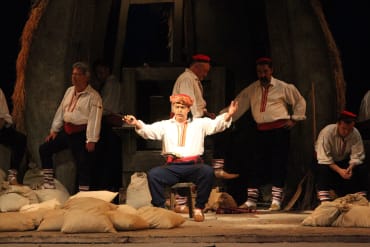
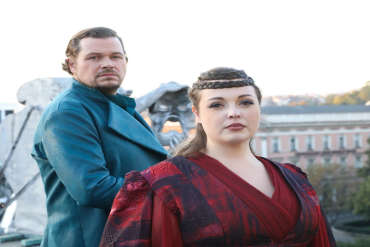
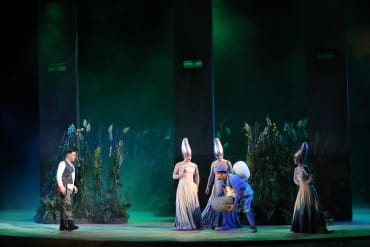
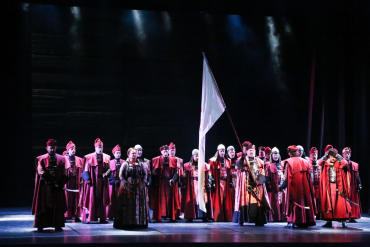
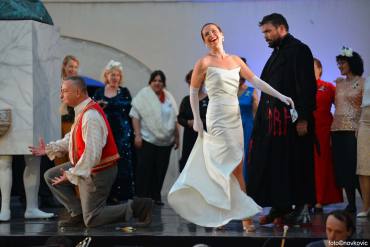
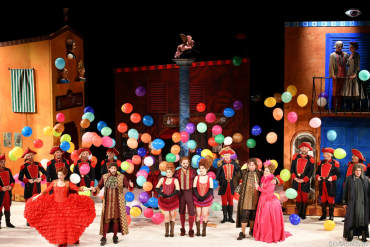
Richard Wagner’s opera Tannhäuser from 1845 marks a transitional moment in his oeuvre, poised between early Romantic influences and the musical dramas of his mature period. Drawing on legends of medieval minstrels, Wagner penned the libretto himself. Torn between sacred and carnal love, the protagonist Tannhäuser abandons the sensual world of the goddess Venus. Seeking redemption in the human world, he meets and falls in love with the pious Elisabeth. However, his public confession of Venus and his passions at a song contest leads to his banishment, forcing him to travel to Rome to seek the Pope’s forgiveness. The Pope denies him forgiveness, but after the death of Elisabeth, whose pure love for him was a source of hope, Tannhäuser is saved. Elisabeth redeems him with her love. With its use of leitmotifs and through-composed form, Tannhäuser anticipates the artistic direction Wagner would fully embrace in his later works. Philosophically and symbolically, the opera is driven by dualities, musically conveyed through the contrast between the sensual and the spiritual. Religious scenes such as the pilgrims’ chorus and Elisabeth’s prayer form a powerful counterpoint to the chromatics of Venus’s seductive music.
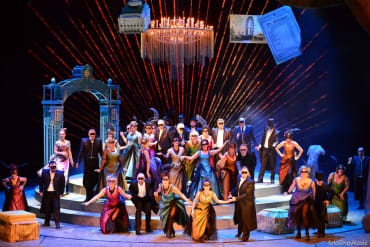
The production is directed by Frank Van Laecke, a Belgian director with a distinguished international career in opera, musical theatre and drama, who has won numerous awards at home and abroad, including a nomination for the prestigious Laurence Olivier Award in the UK. His oeuvre showcases his ability to honour classical forms while revitalising traditional operatic aesthetics. Renowned conductor Srba Dinić, a long-standing collaborator of the Croatian National Theatre in Zagreb, once again leads the orchestra, bringing a wealth of experience from conducting major orchestras and soloists.
Duration
Act I – 55 minutes
Interval – 20 minutes
Act II – 65 minutes
Interval – 20 minutes
Act III – 50 minutes
Total running time, including intervals, is approximately 3 hours and 40 minutes.
The premiere partner is the Embassy of Belgium in Zagreb.
Tannhäuser is available to audiences worldwide on OperaVision from 19 June to 19 December 2026.
OperaVision operates within Opera Europa, Europe’s largest network of opera houses and festivals, which continuously supports the accessibility of opera, international collaboration, and the development of new generations of opera artists.
This project is co-funded by the European Union’s Creative Europe programme.

 |