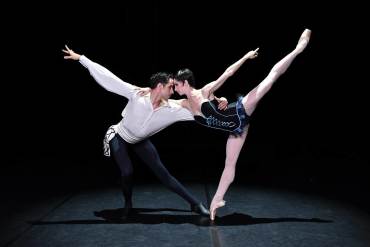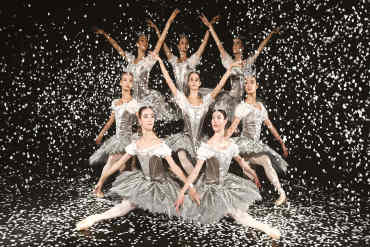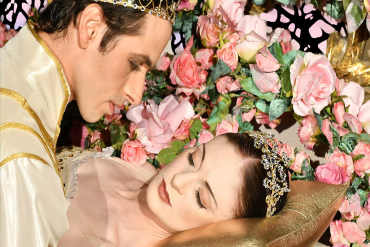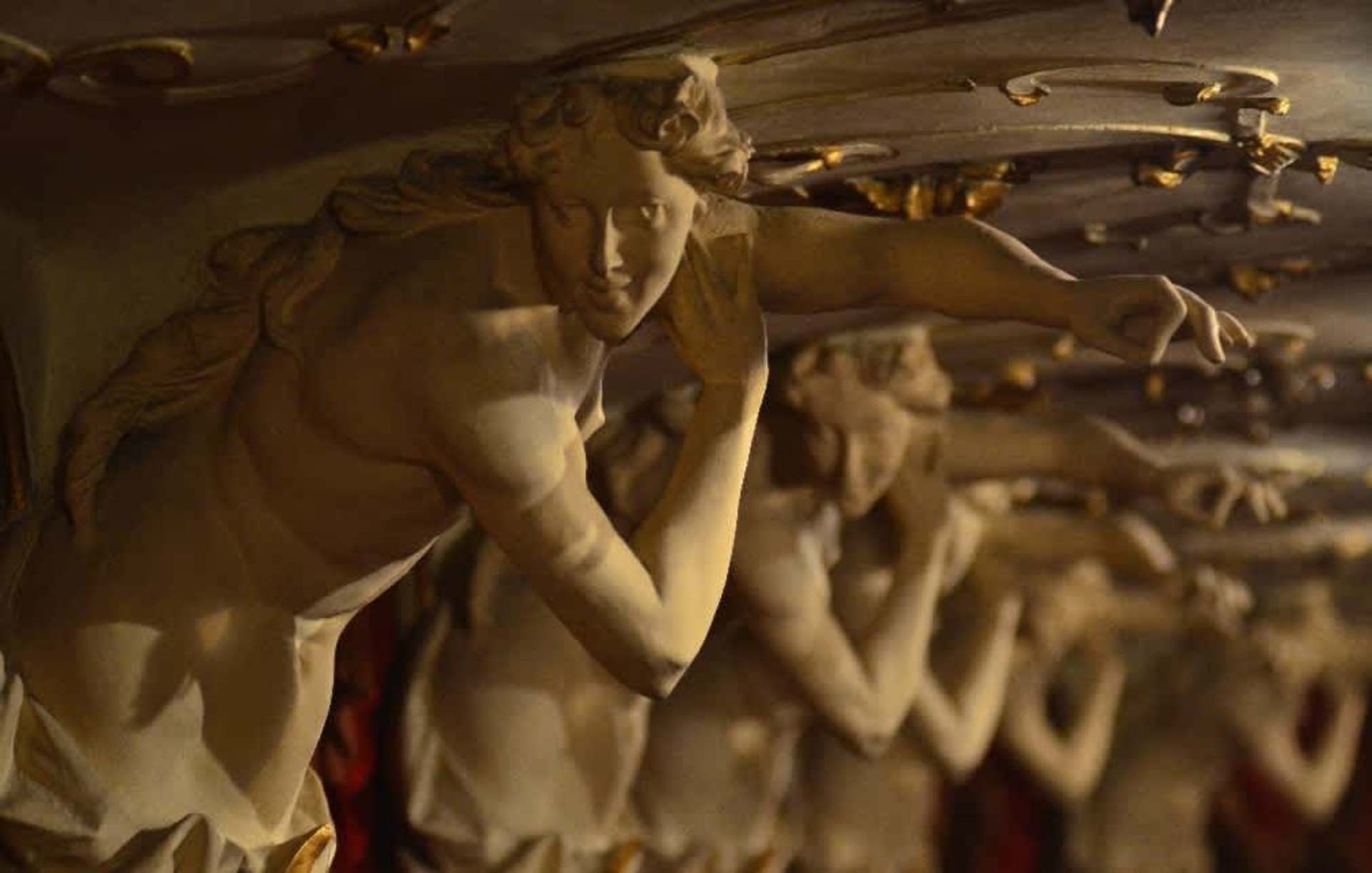
La Bayadère, the ballet by the celebrated choreographer Marius Petipa, tells the tragic story of Nikiya, a temple dancer, and the warrior Solor, who, despite his vow of eternal love, betrays her and marries another. After Nikiya’s death, she continues to haunt him in his dreams, and their encounter in the celebrated Kingdom of the Shades scene becomes a pinnacle of pure dance.
This celebrated work of the classical ballet repertoire was created through the close collaboration between Petipa and the composer Ludwig Minkus, who possessed an exceptional ability to adapt his music to the demands of dance. This lavish and technically demanding production, requiring a large ensemble, premiered in Saint Petersburg in 1877. The audience’s applause lasted for half an hour, while critics gave unreserved praise to both the creators and the performers.
Inspired by Romanticism and by a fascination with mysticism, distant lands and the exotic East, La Bayadère unites reality and imagination while foregrounding the virtuosity and formal purity of classical dance. Despite its technical demands, the ballet has endured as an indispensable work of the international repertoire, often presented in various adapted versions. La Bayadère has also been staged in Zagreb: first in 2002, in choreography, direction and dramatic adaptation by Dinko Bogdanić, and again in 2015, in choreography and direction by Vasily Medvedev.
In the 2025/2026 season, Zagreb audiences will encounter a new staging of La Bayadère — the production created in 1980 for American Ballet Theatre by the celebrated Russian prima ballerina and choreographer Natalia Makarova, based on the original choreography of Marius Petipa. It was one of the most ambitious ballet productions in the history of the company, yet the effort proved more than worthwhile, resulting in a refined, lavish and enchanting staging that helped popularise the ballet beyond the Soviet Union. Natalia Makarova devoted much of her career to preserving and revitalising the classical ballet tradition, staging and reimagining canonical works around the world. Her La Bayadère remains one of the clearest expressions of her lasting influence on classical ballet today. The exotic world suspended between reality and dream, together with a refined and pure classicism in its most refined form, will now also be brought to Croatian audiences in a performance by the Ballet of the Croatian National Theatre in Zagreb.