In Memoriam: Sonja KastlBallet — 26. October 2026.
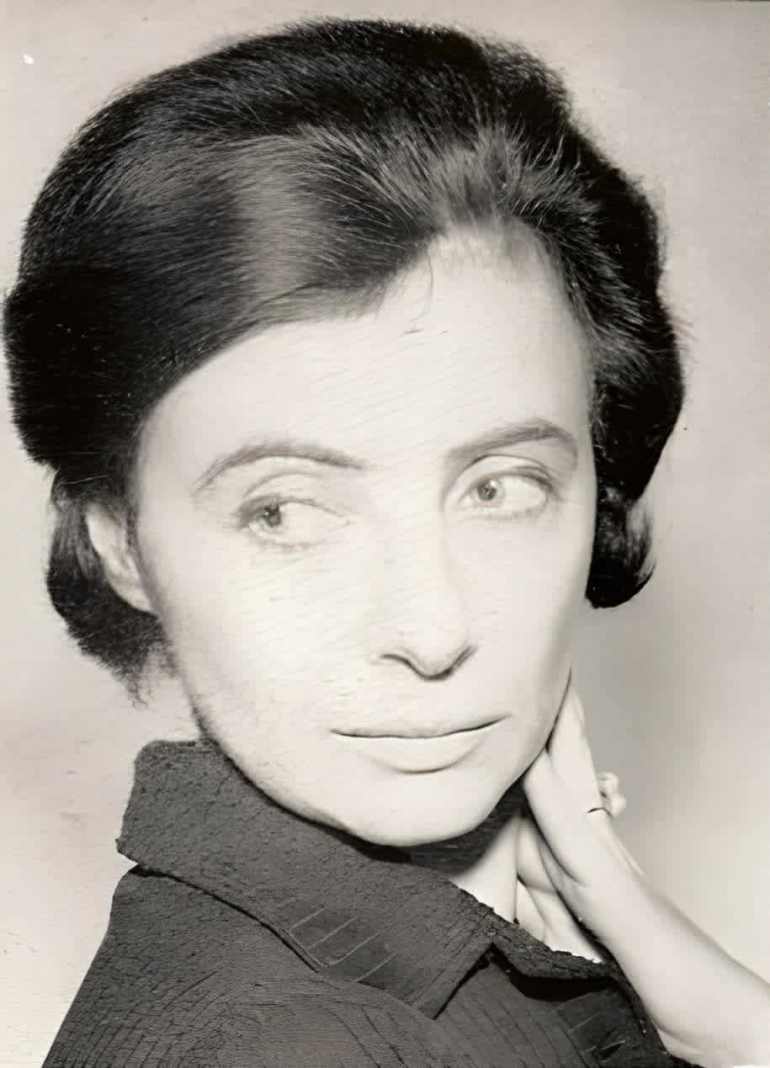
It is with great sadness that we bid farewell to Sonja Kastl, a distinguished Croatian ballerina, choreographer and ballet teacher, and one of the leading figures in Croatian ballet in the second half of the twentieth century.
Sonja Kastl was born in Zagreb on 14 July 1929. She started studying ballet in 1936 with Mercedes Goritz-Pavelić, then continued her training with Margarita Froman, first at Dječje carstvo and later at the School of Arts. She furthered her studies with Milorad Jovanović and Đurđa Đurđan at the Croatian National Theatre in Zagreb; in 1955 and 1956, she attended the Cecchetti School in London, where she studied with the British ballet dancer and choreographer Mary Skeaping, and in Paris with Olga Preobraženska and Nora Kiss. She also attended the CNT Acting School.
Sonja Kastl became a permanent member of the ballet company of the Croatian National Theatre in Zagreb in 1945, a soloist in 1952 and a principal dancer in 1954. Over the course of a dancing career spanning almost two decades, she performed numerous leading roles in both the classical and contemporary repertoire, distinguished by her lightness on stage, lyrical expression, virtuoso technique and powerful interpretations of roles as both a dancer and an actress. Some of her most important roles included Aurora and the Bluebird in Pyotr Ilyich Tchaikovsky’s The Sleeping Beauty, Francesca in Francesca da Rimini, Swanilda in Delibes’s Coppélia, Juliet in Prokofiev’s Romeo and Juliet, Cinderella in Prokofiev’s eponymous ballet, the Queen of the Amazons in Ivan Kogan Semenoff’s Amazons, the Princess in Ballad of a Medieval Love, Jela in Fran Lhotka’s The Devil in the Village, as well as the Girl in Bartók’s The Miraculous Mandarin. She also performed in The Licitar Heart, Classical Symphony, Apollon musagète, Petrushka, The Legend of Ohrid, Pictures at an Exhibition, Night on Bald Mountain, La Valse, Symphonie fantastique and many other ballets. In 1960, her performance in The Miraculous Mandarin won first prize at the Ballet Biennale, held as part of the Ljubljana Festival.
Following an injury in 1964, Kastl retired from dancing. In 1965, she became the first director of the newly independent Ballet company of the Croatian National Theatre in Zagreb. She continued to work at the Theatre until 1970 as a choreographer, teacher and ballet mistress. From 1970 to 1972, she held the same positions with the ballet company of the City Theatre in Klagenfurt.
She began choreographing after furthering her studies in Paris, where she became acquainted with modern Western European dance. In collaboration with Nevenka Bidjin-Horvat, she created numerous choreographies, particularly to music by Croatian composers. These included Symphony for a Dead Soldier and Three War Stories by Boris Sakač, Encounters by Ivo Kirigin, Man Before the Mirror by Milko Kelemen, Symphony in D by Luka Sorkočević, Variations by Pavao Dešpalj, The Last Role by Igor Kuljerić, Dubrovnik Sketches by Bruno Bjelinski, and Three Cavaliers of Miss Melanija, based on the work by Miroslav Krleža, with music by Boris Papandopulo. Among her choreographies to music by foreign composers, Othello, set to music by Boris Blacher, was particularly notable. She also choreographed ballets in Rijeka, Ljubljana and Klagenfurt, and created numerous choreographies for television.
More than a hundred choreographies for operas, operettas and musicals formed a significant part of her repertoire. From 1958 onwards, she choreographed operas in Zagreb, later extending her work to Split, Rijeka and Osijek, as well as to the opera festival in Verona. She collaborated with Komedija, Zagreb’s City Theatre, where she became a permanent associate in 1989, working as a choreographer and ballet teacher. She also choreographed major skating shows, including the opening ceremonies of the European Figure Skating Championships in Zagreb in 1974 and 1979, and the closing ceremony of the 14th Winter Olympic Games in Sarajevo in 1984.
Another important aspect of her career was teaching. From 1957 to 1986, Sonja Kastl taught ballet at the School of Ballet and Rhythmic Gymnastics. Between 2000 and 2003, she taught stage movement at the Academy of Music in Zagreb and its branch in Osijek. She served as president of the Croatian Ballet Artists Association from 1980 to 1983 and of the Yugoslav Ballet Artists Association from 1983 to 1989. She contributed to Hrvatski leksikon and the Croatian Encyclopaedia, published by the Miroslav Krleža Institute of Lexicography, and co-edited the monograph 125 Years of Professional Ballet in Croatia, published in 2002.
Her only film role was in Zastava (The Flag, 1949), directed by Branko Marjanović, in which she played Maria, a young ballerina and the lead character. Her life and artistic career are documented in the monograph Plesati znači živjeti (To Dance Is to Live) by Davor Schopf and Mladen Mordej Vučković, published in 2007.
Kastl received numerous awards and honours for her artistic work, notably the Vladimir Nazor Award for Lifetime Achievement in 1991 and the Croatian Theatre Award for Lifetime Achievement in 1998.
We extend our heartfelt condolences to her family and friends.