The Impossibility of Communication, or Why Absurdity Must Be Laughed At
Eugène Ionesco’s play The Bald Soprano is often associated with existentialism and themes such as meaninglessness, absurdity, and alienation. Yet it is equally compelling to view it through the lens of the philosophy of language, particularly Wittgenstein’s idea of language games and Austin’s theory of speech acts. The central idea of the play is the impossibility of communication.
Wittgenstein believed that words acquire meaning only through context and use. In the play, the characters speak mechanically, relying on phrases devoid of genuine connection or understanding. They do not communicate as individuals, but merely produce sounds without meaningful content. The absurdity lies not in the words themselves, but in the way they are used. Ionesco reveals how communication collapses once language becomes automated and empty.
The absurdity of the human condition is further underscored through humour. Although the play speaks of meaninglessness and the distance between people, this very absurdity is transformed on stage into comedy. Laughter becomes a response to the stripped-down reality of human existence. This is precisely why the play remains so relevant today, in an age of technology, social media, and superficial communication, when speech and meaningful dialogue are increasingly endangered.
Austin’s theory of speech acts provides a further key to understanding the play. Speech is not merely the transmission of information, but a form of action. In The Bald Soprano, however, the characters remain trapped within empty sentences that produce neither genuine communication nor understanding. Because language no longer functions as action, there is no conventional dramatic plot. The relationships between the characters remain mechanical, artificial, and absurd.
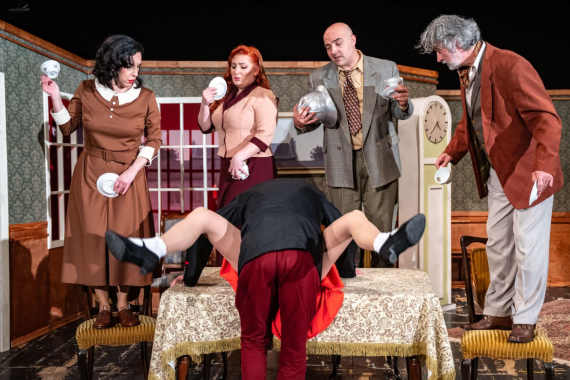
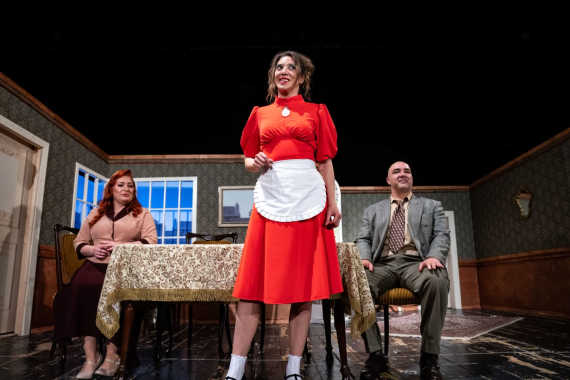
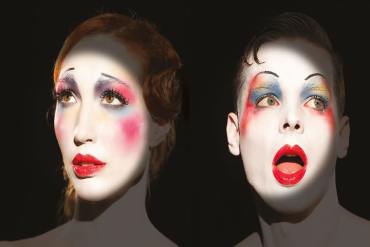
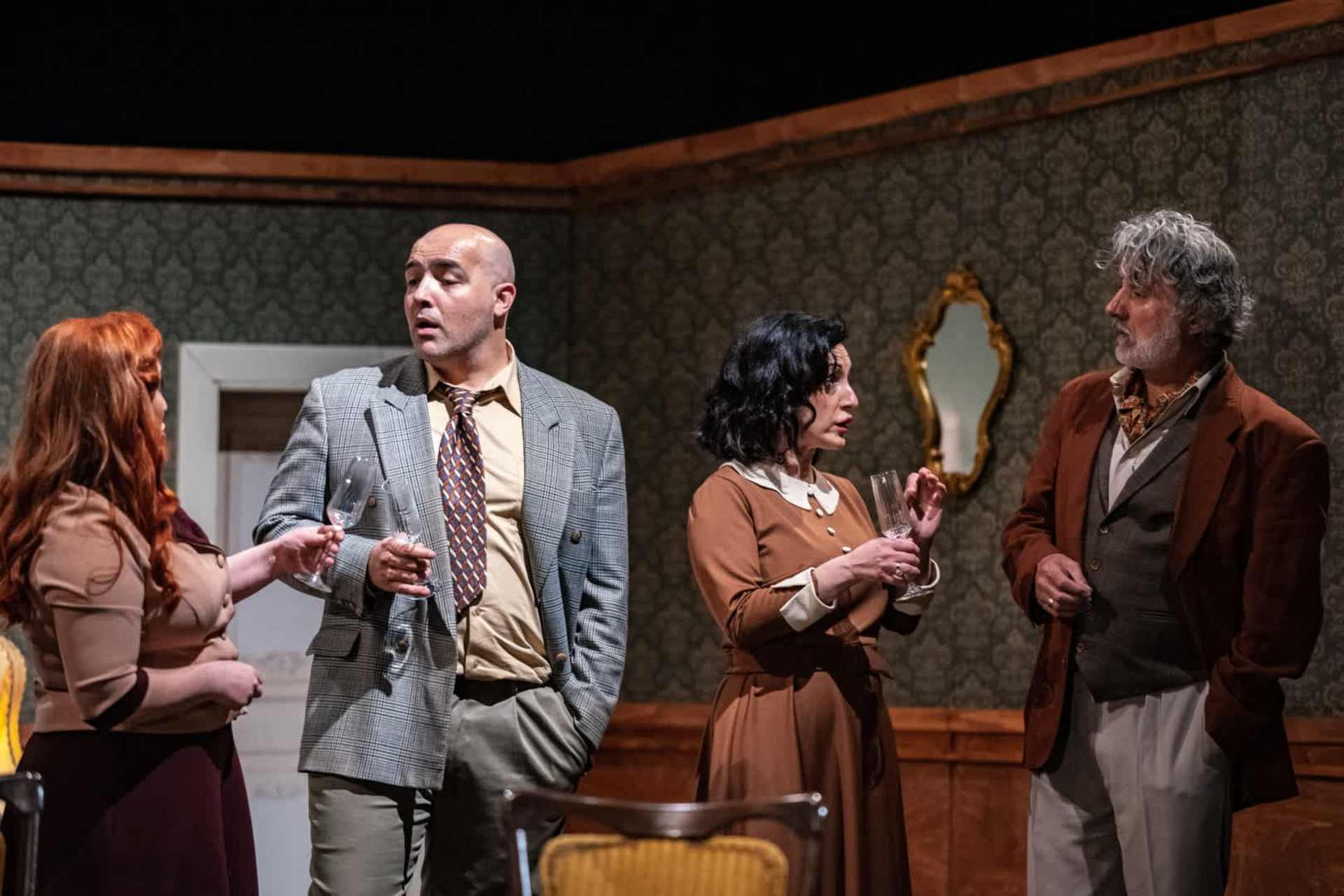
The Croatian National Theatre in Mostar’s production, directed by Goran Damjanac, further emphasises the importance of speech, pauses, gestures, and vocal effects. The realistic set design stands in contrast to the absurdity of the characters, highlighting their inability to communicate. In this way, the play reminds us how essential language is to human relationships and how deeply we are shaped by the way we speak.
Director: Goran Damjanac
Assistant Director: Ilija Pujić
Set Designer: Vesna Režić
Costume Designer: Sandra Milavić
Music: Andrijan Zovko
Movement Director: Fatima Kazazić Obad
Voice Coach and Soloist: Milica Damjanac
Stage Manager: Ivana Marić
Head of Production: Mario Bošnjak
Lighting Designer: Toni Cvitković
Sound Engineer: Goran Rebac
Props Master: Marko Mrdaković
Wardrobe Supervisor: Helena Jozić
Stage Manager: Leo Smoljan
Stage Crew: Zorislav Galić and Kristijan Mandić
Cast
Mrs. Smith: Nikolina Marić
Mr. Smith: Miro Barnjak
Mrs. Martin: Mirela Kordić
Mr. Martin: Ivan Skoko
Mary: Ana Franjčević
The Fire Chief: Robert Pehar