CNT About the Building
Ceremonial Curtains
The Croatian National Theatre in Zagreb owns one iron and seven painted curtains that are displayed on various ceremonial occasions.
The oldest and also the first, the fan-shaped curtain Grandfather, Grandson and the Fairy, is attributed to the Croatian painter Vjekoslav Karas and was installed around 1850. It is the only preserved object from the stage equipment of the old Upper Town theatre, the so-called Stanković Theatre.
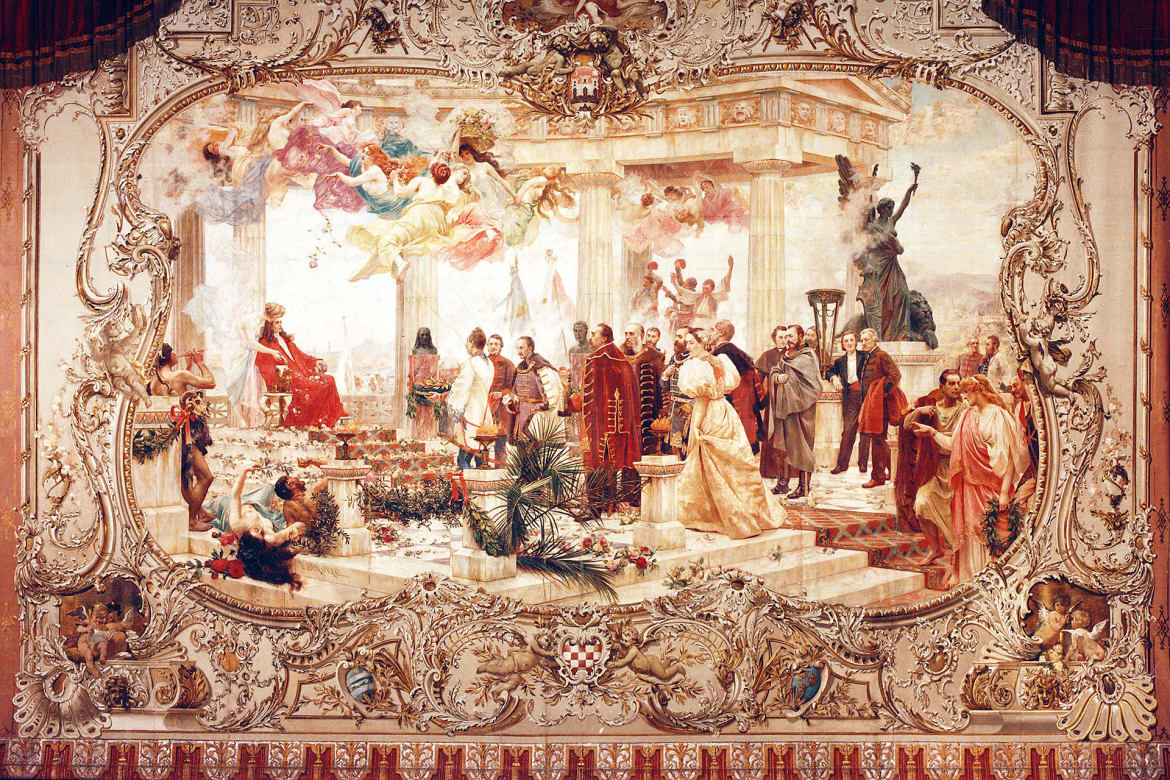
Among the many proposals that Intendant Stjepan Miletić submitted to the Government during the construction of the new Croatian National Theatre building, his idea to commission painter Vlaho Bukovac to create the ceremonial curtain for the opening of the new theatre in 1895 was accepted. Today known under the name The Croatian Revival, the curtain originally bore the working title The Celebration of National Lyric and Dramatic Poetry, and its actual title was The Revival of Croatian Literature and Art. Miletić’s concept for the ceremonial curtain was guided by the idea of cultural unification of the two Croatian centres – Dubrovnik and Zagreb. The foreground of the composition depicts the portico of an ancient temple in which the renowned Dubrovnik poet Ivan Gundulić is seated, crowned by fairies and genii, while the Croatian national revivalists of the 19th century, led by Ljudevit Gaj, approach to pay homage. A special group consists of three distinguished theatre artists – Josip Freudenreich and the then still-active celebrated actors Adam Mandrović and Marija Ružička Strozzi. In the background on the left, the outlines of Dubrovnik and the Minčeta Tower can be seen, along with the people of the Dubrovnik region celebrating freedom, while in the background on the right, the outlines of Zagreb and the inhabitants of northern Croatia are depicted. The unification of Croats from the north and south in Bukovac’s curtain became a symbol of the idea of Croatian unity. After a hundred years of use, in 1999 it was replaced by a replica created by painters Ivica Šiško and Eugen Kokot with collaborators.
During the reconstruction of the building from 1967 to 1969, three new curtains were created – one iron and two painted. The iron curtain, based on the concept of Croatian painters Kamilo Tompa and Fran Šimunović and sketched and executed by painter Vladimir Pintarić, was installed above the proscenium and remains in use today. In the same year, 1969, the curtain Tito Forward by painter Fran Šimunović was created, based on the poem of the same name by Croatian poet Vladimir Nazor, as well as the curtain entitled A.D. 1573 by painter Krsto Hegedušić, on the theme of the Peasants’ Revolt of 1573.
In 1994, on the occasion of the 900th anniversary of the City of Zagreb and the Archdiocese of Zagreb, the ceremonial curtain The Four Seasons by Ivan Lacković Croata was donated to the Croatian National Theatre in Zagreb; it was executed by painter Rudolf Labaš.
In 1997, on the occasion of the sixtieth anniversary of performances of the ballet The Devil in the Village by Fran Lhotka, the ceremonial curtain The Devil in the Village was created, painted by Ivan Lovrenčić based on motifs from the ballet.
Installed in 1999, the ceremonial curtain entitled Harmica (the old name of Zagreb’s central square, today Ban Jelačić Square) is the work of painter Vasilij Jordan.
The Croatian National Theatre in Zagreb continued its rich tradition by presenting a new ceremonial curtain entitled Judita by the distinguished Croatian artist Zlatko Kauzlarić Atač, which on 5 October 2024 marked the 500th anniversary of the death of Marko Marulić, the father of Croatian literature.
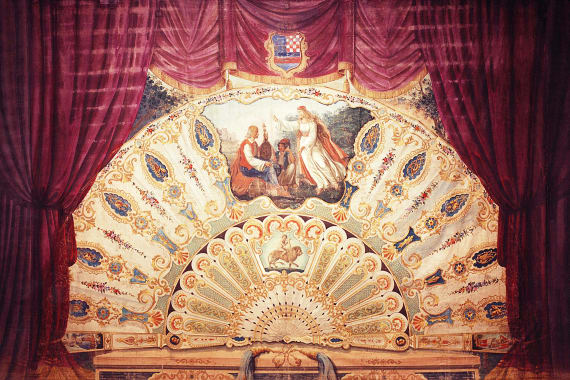
Vjekoslav Karas: Grandfather, Grandson and the Fairy, 1850.
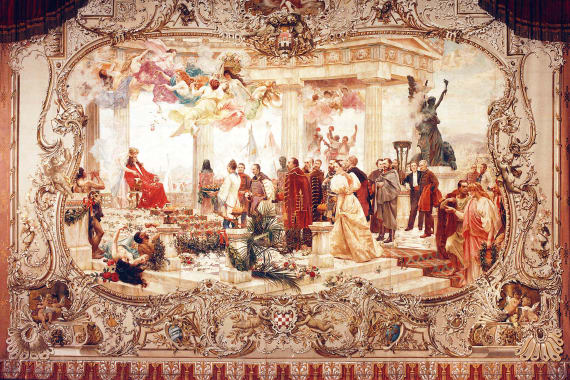
Vlaho Bukovac: The Croatian Revival, 1895.
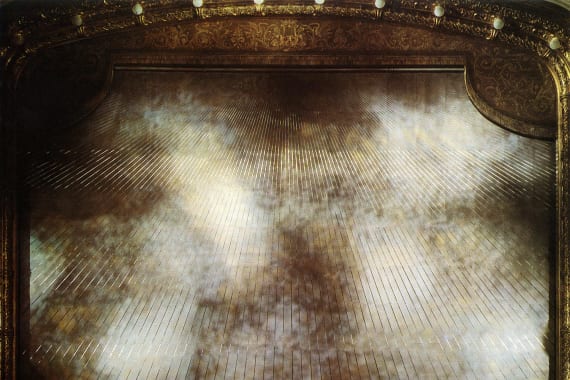
Kamilo Tompa and Fran Šimunović: Iron Curtain, 1969. (executed by Vladimir Pintarić)
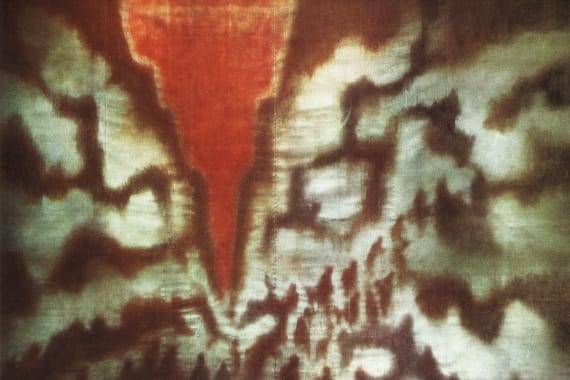
Fran Šimunović: Tito Forward, 1969.

Krsto Hegedušić: A.D. 1573, 1969.
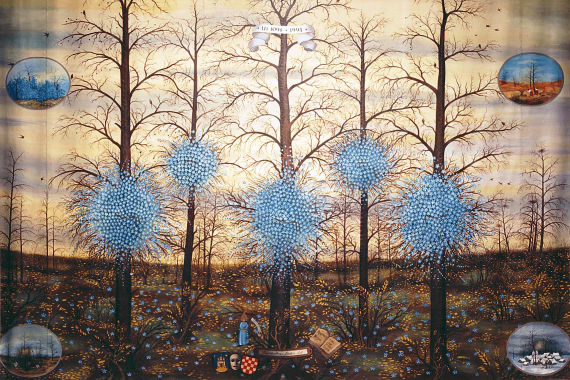
Ivan Lacković: The Four Seasons, 1994. (executed by Rudolf Labaš)
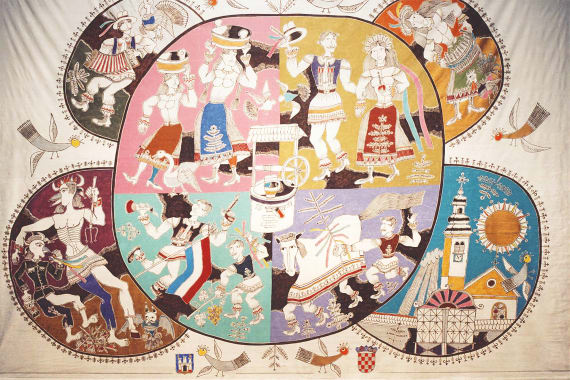
Ivan Lovrenčić: The Devil in the Village, 1997.

Vasilij Jordan: Harmica, 1999.
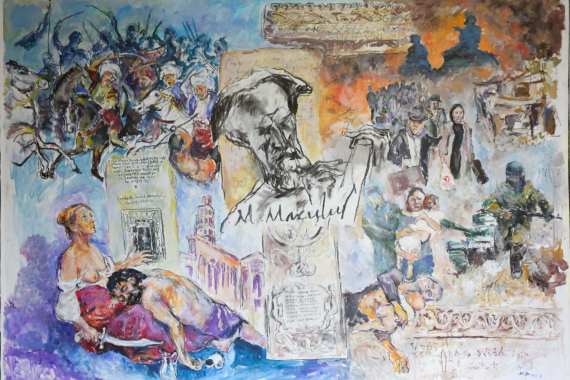
Zlatko Kauzlarić Atač: Judita, 2014.