HNK - Showcase

Showcase

Croatian National Theatre in Zagreb

Tomislav Šoban

TRUTHINESS
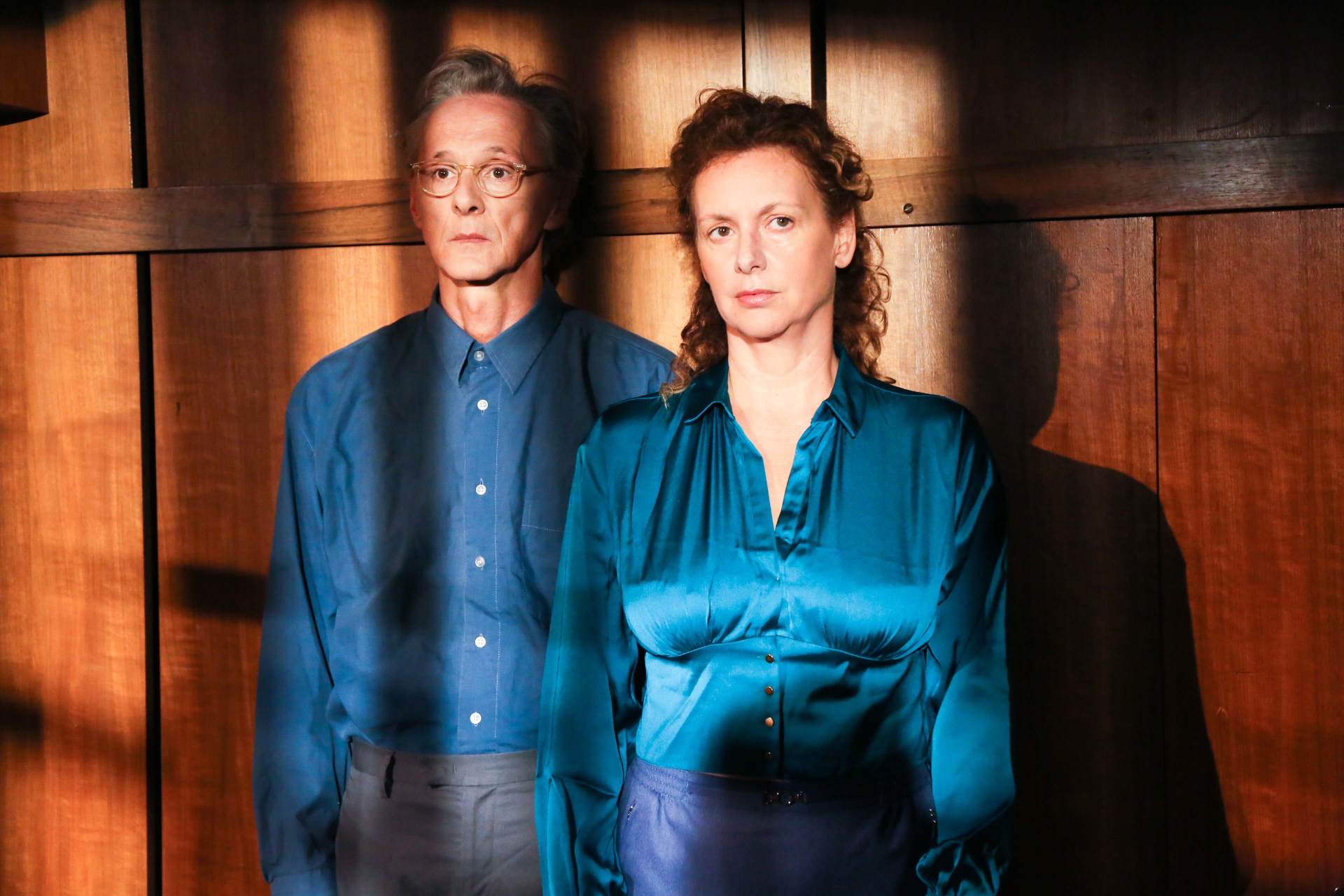
TRUTHINESS
  • Text: Tomislav Šoban
  • Text Coauthor and dramaturg: Marin Lisjak
  • Director and set designer: Tomislav Šoban
  • Costume designer: Gabrijela Krešić
  • Composer of music: Miro Manojlović
  • Light designer: Luka Matić
  • Stage movement: Natalija Manojlović
  • Costume designer's assistants: Suzana Tkalčec, Nina Kovačević (volunteer)
  • Stage manager: Suzana Bogdan-Pavek

Actors: Nina Violić, Livio Badurina

  • World premiere in Zagreb: 15th October 2023
  • Duration: 60 minutes (no intermission)

Two actors in a studio on top of a building built in the Austro-Hungarian Empire. In a space decorated in the modernist style of the 50s of the past century. In the studio primarily intended for sound recordings. Two actors in the studio will perform an experiment. Inspired by the lectures of physicist Richard Feynman. An experiment or a trial is an analytical procedure that studies cause-and-effect relationships. In the natural sciences, it is a procedure of controlled observation and measurement of phenomena. The experiment gives us answers as to why something happens. Why is the same event replicated? The experiment can point to what is important and what is not. An experiment can shed new light on known phenomena. In the natural sciences, an experiment has succeeded if it always replicates the same result. In performing arts, an experiment is successful if it never concludes in the same way. (This is the extent of what we can reveal at this moment.)


Tomislav Šoban

(Zagreb, born in 1981)

Tomislav Šoban graduated in 2004 from the Graphic Arts Department at the Academy of Fine Arts in Zagreb. In 2020 he completed an M.A. in film and TV directing at the Academy of Dramatic Art in Zagreb, majoring in feature film. Since 2009 he has been an active member of the Zagreb Cinema Club (Kino klub Zagreb), of which he was the president from 2018 to 2022. His research interests address cinematic form and means of expression. He is the author of many short films of different film genres that were shown at various national and international festivals.

Croatian National Theatre in Zagreb

Đurđica Čilić

FAFARIKUL

FAFARIKUL
  • Director: Ivan Planinić
  • Adaptation: Ivan Planinić and Mirna Rustemović
  • Dramaturgy: Mirna Rustemović
  • Set and lighting designer: Ivan Lušičić Liik
  • Costume designer: Ana Fucijaš
  • Composer: Nikša Marinović
  • Sound designer: Luka Gamulin
  • Stage movement and assistant director: Maja Marjančić

Ensemble of the performance:

  • Daria Lorenci Flatz
  • Živko Anočić
  • Vlasta Ramljak
  • Franjo Kuhar

Stage manager and prompter: Antonio Mrzlić

World opening night 18.02.2024


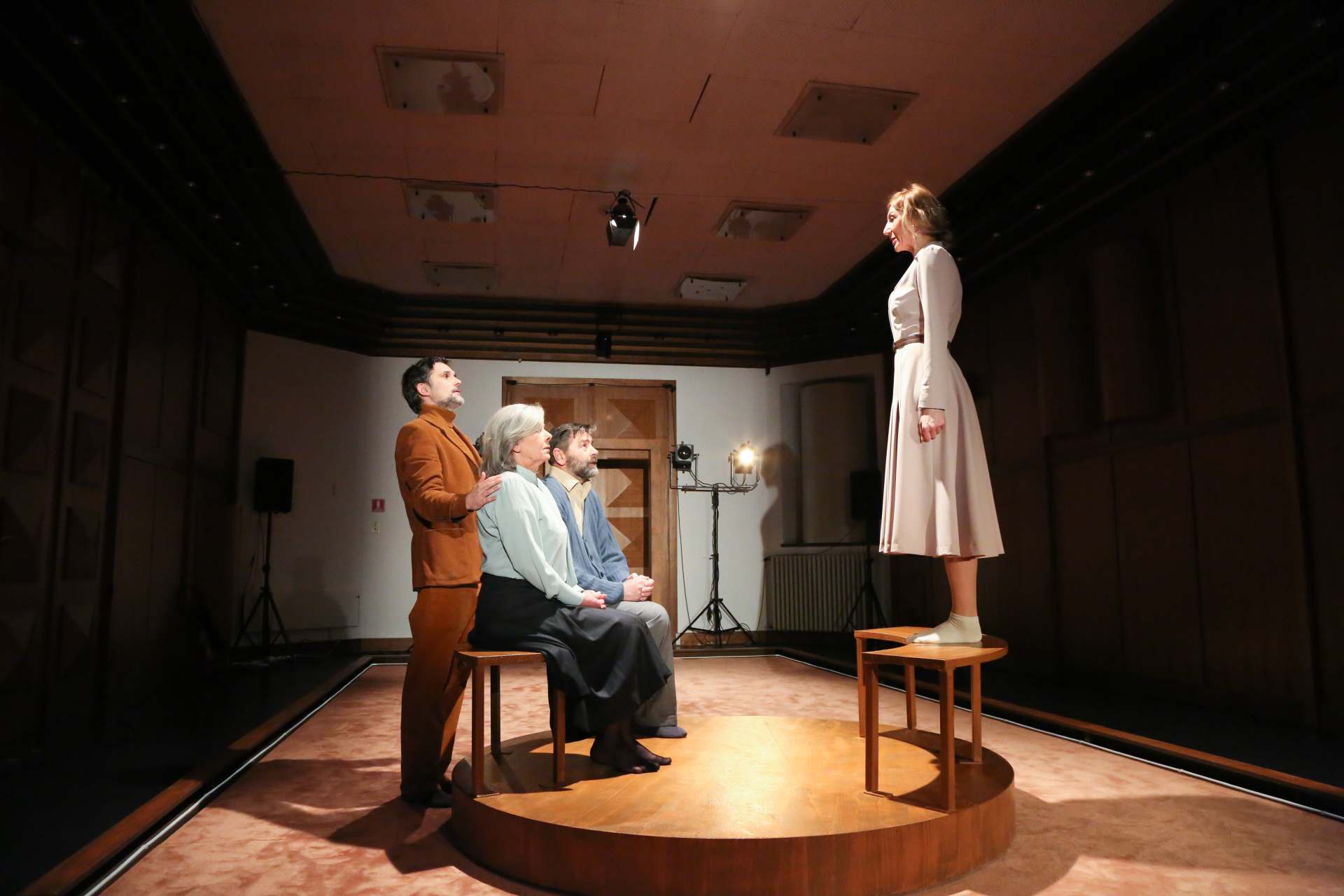
The sources for the proposed performance Fafarikul, are two books by writer and translator Đurđica Čilić, Fafarikul and The New End. These are books that mix anecdotes, memories, the ends and the beginnings of a life, and grabbing the loose ends of another life.

Fafarikul is a collection of a hundred stories, anecdotes and memories, a collection of errors, fears, defects, joys and detours that lead to the right path, details that seem unimportant but permanently and significantly engraved in our memory. It’s a collection of memories of childhood, growing-up, and the moment we live in, of small deaths and great joys - about everything that’s present in one life that we recognize unrelated or connected to a geographical place. The New End is a novel of a fragmented composition that can be interpreted also as a collection of stories. It can also be considered as a continuation of Fafarikul, in which one of the many narrative lines which dominates is the relationship between the mother and the narrator. The author in a simple, warm, almost melancholy manner evokes the relationship with her mother, from the awareness of her illness until the inevitable end, and by writing down her story, she cathartically comes to terms with the end, because her mother continues to live in the stories. The author successfully builds a large story based on small, incidental life details. Through Fafarikul, the narrator leads us through her story and biography, from Polish poets to a student campus on Sava River, a small Bosnian village, border crossings, sevdah and Pips Chips & Videoclips, and it’s intended as a performative blend of all these small and big stories and, on the other side of the spectrum, a post-dramatic music band. In this blend, the selection of stories, that is, their dramatization, follows the geographical, cultural and identity layers of the proposed text, while incorporating a drama libretto for a band that consists of the lead vocalist and three instrumental-vocal performers. The director of this performance, Ivan Planinić, opens the door to new and experimental forms in smaller theatre venues at Zagreb’s CNT.


Croatian National Theatre in Zagreb

Bobo Jelčić

SORRY

SORRY
  • Director: Bobo Jelčić
  • Dramaturg: Mirna Rustemović
  • Costume / Stage design: Zdravka Ivandija Kirigin
  • Light Design: Ivan Lušičić Liik
  • Assistant director: Patrik Sečen
  • Assistant dramaturg: Karla Leko
  • Assistant costume designer: Tina Spahija
  • Production assistants: Katarina Krešić, Josip Gregov
  • Stage manager: Antonio Mrzlić

Cast: Jadranka Đokić / Lana Meniga / Melody Martišković / Marko Makovičić / Luka Knez / Lara Nekić / Vid Ćosić / Marin Stević / Alma Prica / Ivan Colarić / Andrej Drenski / Antonio Mrzlić

Extras: Andrej Drenski, Patrik Sečan

Pianist: Karlo Hubak

World premiere: 15. June 2022 at the Croatian National Theatre in Zagreb

Co-produced in the frame of “Prospero – Extended Theatre”, a project co-funded by the Creative Europe programme of the European Union, whose members are: Théâtre de Liège, L'Odéon-Théâtre de L'Europe – Paris, Emilia Romagna Teatro Fondazione – Modena, Schaubühne – Berlin, Göteborgs Stadsteater, Hrvatsko narodno kazalište u Zagrebu, São Luiz Teatro Municipal – Lisboa, Teatros del Canal – Madrid, Teatr Powszechny – Warszawa, and ARTE.

This work reflects only the authors' view and the EACEA Agency and the European Commission are not responsible for any use that may be made of the information it contains.


About

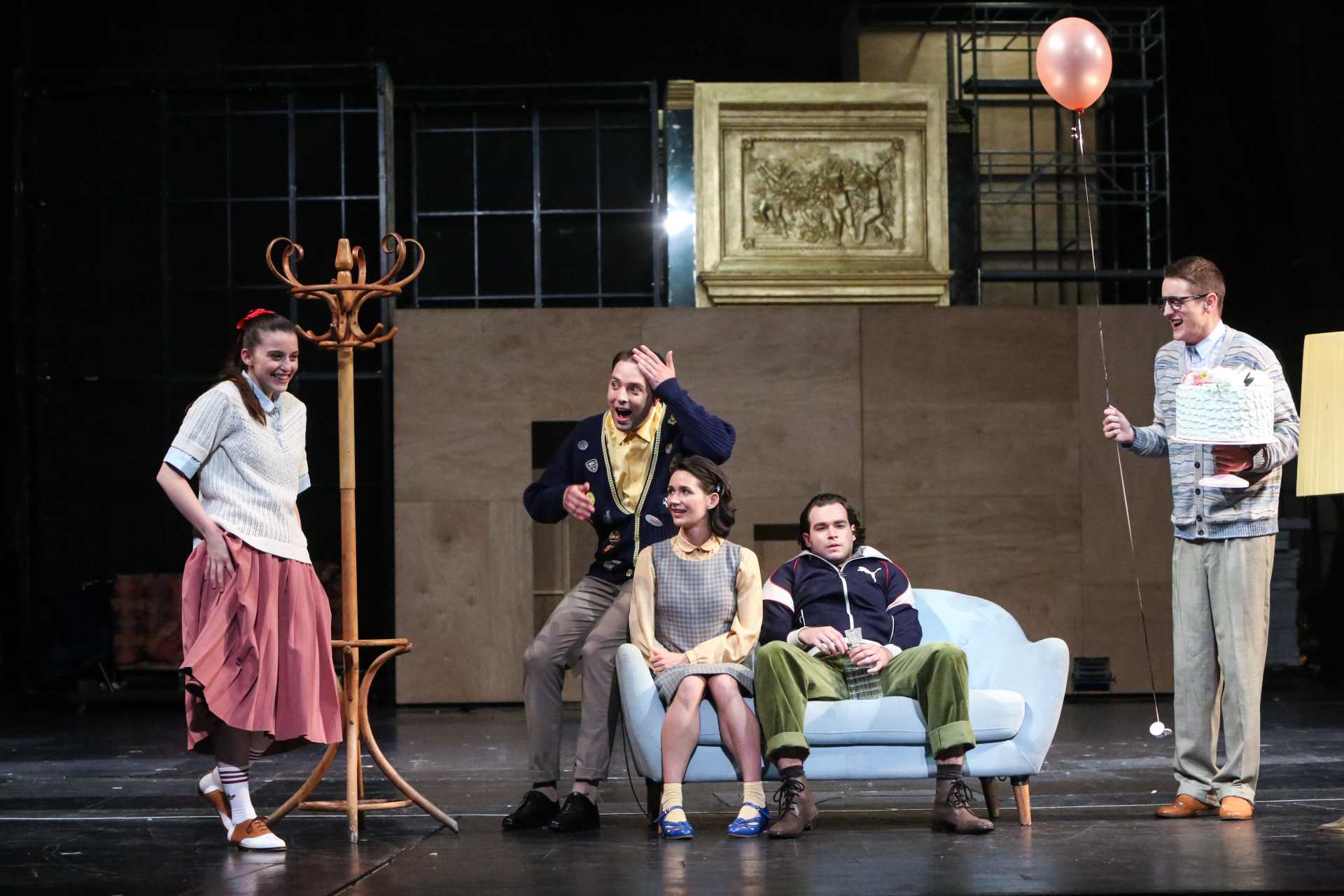
Instead of following the age-old model by which theatre imitates reality, director Bobo Jelčić creates a theatre in which reality and imagination merge. Following the principle of chance and coincidence, in his projects he collects fragments of events most often not connected by plot, story or action, thus constructing an open form which is yet to become a play (a drama). Such dispersive manuscripts allow theatrical integration and disintegration to occur simultaneously, a process that has already been applied and practiced in literature for a number of decades. Jelčić has a unique approach to working with actors, where all of his projects are the result of collective authorism of the entire cast, based on improvisation and personal experience. He writes and directs, searching for contemporary alternatives to classical and conceptual forms of theatre. Show Sorry is designed as a theatrical process in which research will be radically focused on social issues and emotions based on people's everyday struggles. In the play Sorry, the director Bobo Jelčić uses a simple prop to explore life in the theater and theater in life, with a direct approach in working with actors, shaping a minimal series of events set among the inhabitants of a small and ordinary town. In this theatrical research, the actors of the Croatian National Theater in Zagreb and very young actors meet and together deconstruct archetypal stories about seemingly simple relationships, such as the relationship between mother and daughter, father and son, within friendship, first loves...


From the reviews

In his famous way, Jelčić created a play in which ensemble kept me in suspense: I knew what was going to happen, but not how it was going to happen!
— Olga Vujović, Kritikaz

…. we got a comedy that deepens Jelčić's previous directorial poetics and establishes new ways of contemporary theater acting.
Novi list


CROATIAN NATIONAL THEATRE IN ZAGREB

Annie Ernaux

THE YEARS

THE YEARS
  • Translation: Vlatka Valentić (Godine, Djevojačke uspomene), Milena Ostojić (Događaj), Marko Gregorić (Jedna žena), Ela Agotić (Samo strast)
  • Adaptation: Jovana Tomić and Mirna Rustemović
  • Director: Jovana Tomić
  • Dramaturge: Mirna Rustemović
  • Composer: Vladimir Pejković
  • Set Designer: Zdravka Ivandija Kirigin
  • Costume Designer: Selena Orb
  • Choreographer: Petra Hrašćanec
  • Lighting Designer: Vesna Kolarec
  • Assistant Director: Marta Tutiš
  • Assistant Set Designer: Andrea Lipej
  • Assistant Costume Designer: Irena Stolla

Ensemble of the performance:

  • Ksenija Marinković
  • Daria Lorenci Flatz
  • Iva Mihalić
  • Jadranka Đokić
  • Lana Meniga

Stage Manager: Antonio Mrzlić

Prompter: Danijela Zobunđija

Premiere 6. 6. 2025

Based on:
Les années, Une Femme, Mémoire de fille,
Passion simple, and L’Événement
by Annie Ernaux © Gallimard


In her autobiographical novel The Years (Les Années), Nobel laureate Annie Ernaux skillfully intertwines individual and collective experiences, crafting a shared and reconstructed memory through polished prose and refined literary techniques. Balancing lyrical narration with documentary precision, Ernaux presents her story in the third person, guiding readers through a rich tapestry of autofiction and vivid imagery of France’s past, spanning from the 1940s to the early 21st century.

This layered novel engages with various aspects of everyday life, placing particular emphasis on the female experience, infused with broader societal and political dynamics. Ernaux delicately interlaces themes such as coming of age, friendship, intimacy, the awakening of desire, historical and political transformation, cultural consumption, Catholic tradition, and the evolution of women’s rights — all rendered through deeply personal fragments that resonate with a universal dimension.

In the stage adaptation of Ernaux’s works, director Jovana Tomić and dramaturge Mirna Rustemović centre the story on a woman who reflects on her place in the world by examining her past within a social and political framework and through her most intimate relationships. The treatment of the body plays a central role in the performance’s narrative and language. Corporeality becomes a prism through which a life — and a broader history of women — is revealed.

With her honesty and subtle humour, Annie Ernaux captivates audiences, rendering her deeply personal story universally relevant.

This adaptation draws on Les années and Mémoire de fille (translated into Croatian by Vlatka Valentić, published by OceanMore), Une Femme (translated by Marko Gregorć, published by Kulturtreger and the Multimedia Institute), Passion simple (translated by Ela Agotić, published by Vuković&Runjić), and L’Événement (translated by Milena Ostojić, published by Kulturtreger and the Multimedia Institute).


CROATIAN NATIONAL THEATRE IN ZAGREB

Joe Masteroff — John Kander — Fred Ebb

CABARET

CABARET

At the edge of a collapsing civilisation, on the cusp of 1929 and 1930, a young, aspiring author arrives in Berlin searching for a creative spark. Amid political upheaval, hunger, poverty, and the looming threat of Nazism, Clifford Bradshaw finds small oases of freedom hidden in the shadows, basement clubs, and crumbling rooms.

Taking up residence with the once prosperous but now street-smart Fräulein Schneider, Clifford becomes part of a small urban family of individuals striving to endure and navigate an increasingly challenging future that looms over them. In the concrete maze surrounding Nollendorfplatz, Cliff discovers how much love and hidden beauty can be found even in the darkest times, especially when he encounters Sally Bowles, his muse, his sister, and, perhaps, his soulmate.

The musical Cabaret premiered on Broadway in 1966. It was directed by Harold Prince, with music by John Kander, lyrics by Fred Ebb, and a book by Joe Masteroff. The musical is based on John Van Druten’s I Am a Camera, an adaptation of Christopher Isherwood’s cult (and partly autobiographical) novel Goodbye to Berlin from 1939.

In Cabaret, Masteroff weaves Van Druten’s play and Isherwood’s novel to bring to the stage a world on the verge of collapse, just before the eruption of a volcano or a great flood. In such a world, some choose death and destruction in the name of the future, while others, pioneers of freedom, greet the coming catastrophe with open arms. These latter ones, the despised, led by Sally Bowles (unforgettably portrayed by Liza Minnelli in Bob Fosse’s film adaptation), would rather face the end dancing or dying of laughter than of politics, boredom, or despair.

Despite the darkness, the filth, and fascism, Clifford and Sally, urban counterparts to Romeo and Juliet, a homosexual man and his Frau, managed to create a fleeting haven of hope in the icy Berlin nights, together dreaming the dreams that were never meant to be fulfilled.

This production of Cabaret, a joint project of the Drama, Opera, and Ballet ensemble, will be directed by the beloved choreographer and director Leo Mujić, with Ivan Josip Skender as the conductor.

Sign up to the HNK newsletter